
Operate outdoors
Petrol generators produce carbon monoxide. Never run one inside a home, garage, shed or other enclosed or partly enclosed space, and keep exhaust away from doors, windows and vents.

One street. One visible difference.
The image sets up the question. During the illustrated power-cut scenario, this household still had selected lights and essentials running. The practical reason is explained below.
Read what happened↓What happened
Heavy rain and strong wind are enough to make a power cut feel immediate. Street lights disappear, routers go silent, central-heating controls can stop and the familiar background hum of the house vanishes.
In this scenario, the interruption reaches a suburban street shortly after dusk. Most households switch to phone torches and wait for the supply to return. One family does something different: they move a portable petrol generator into its planned outdoor operating position, away from the building and openings, then connect only the loads they had already decided mattered most.
It is not presented as a whole-house substitute. The point is narrower: a generator sized and used correctly can keep selected equipment available while the mains supply is off.
Preparation changed the feeling of the outage from “what now?” to “we know the next step.”
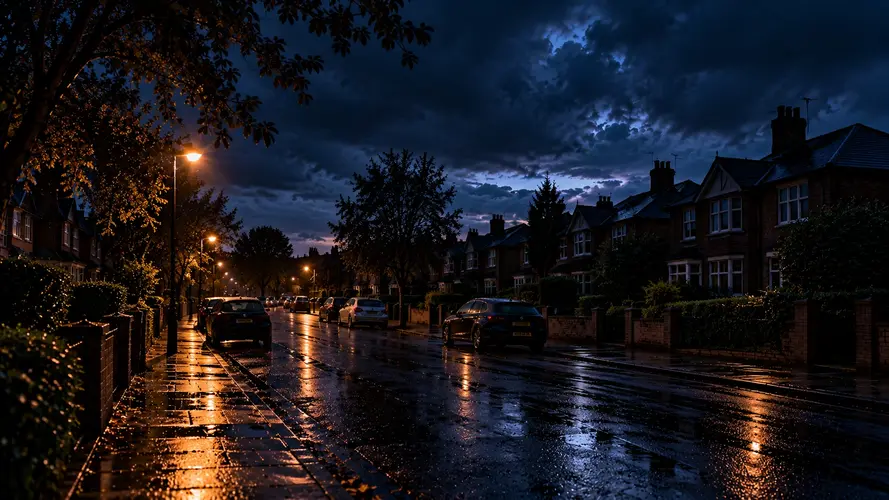
The surrounding street goes dark as mains electricity is interrupted.

At one home, selected lighting and household essentials remain available while the family keeps the evening simple.

The visual contrast is striking, but the explanation is practical rather than mysterious.
The reveal
The household had bought a portable generator in advance and treated it as emergency equipment: stored correctly, checked periodically and used only when required.
The unit did not “power everything”. Instead, the family prioritised a small set of loads—lighting, communications and selected appliances—within the generator’s rated continuous output. That distinction matters because a useful backup plan starts with wattage, not with a dramatic promise.
For homeowners thinking about short power cuts, the appeal is straightforward: selected essential loads can remain available when the mains supply is interrupted, provided the generator is correctly sized, operated outdoors and used in line with the manufacturer’s safety instructions. This is a practical preparedness option, not a guarantee of uninterrupted whole-home power.
See the generator guidefor selected petrol generator options. Exact price depends on output, configuration and availability.
Generator
To make the discussion concrete, the specifications below are drawn from an existing UK-market portable petrol generator configuration. The generator shown in your final imagery can remain unbranded; the technical reference is here to explain the scale of equipment being discussed.
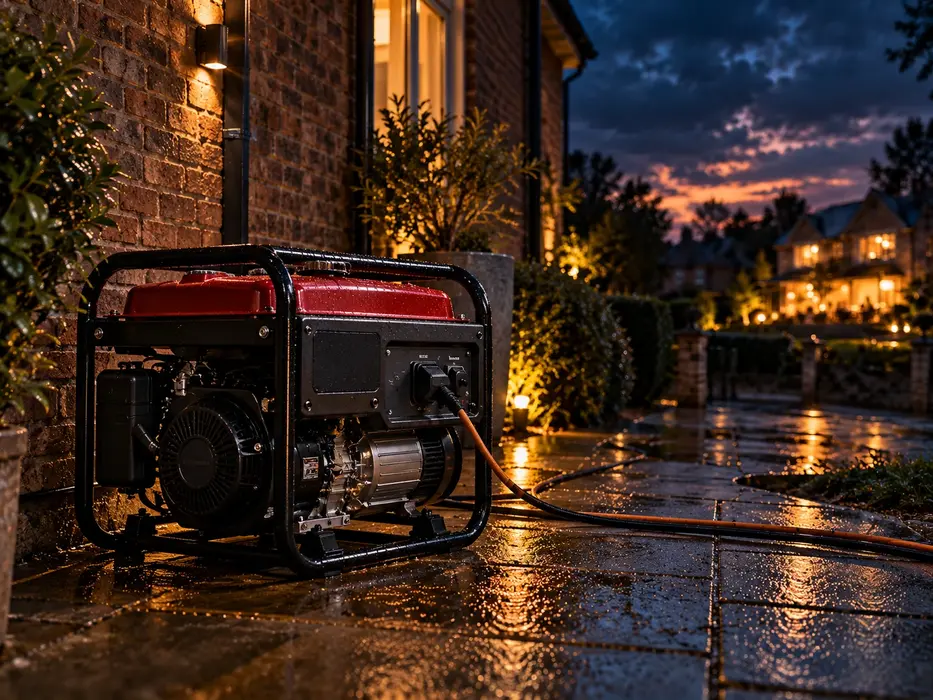
Open-frame, single-phase petrol generator class for selected portable backup loads.
*Manufacturer-rated maximum running time for the reference configuration. Actual runtime depends on load, fuel, maintenance and operating conditions. Exact specifications differ between available units.
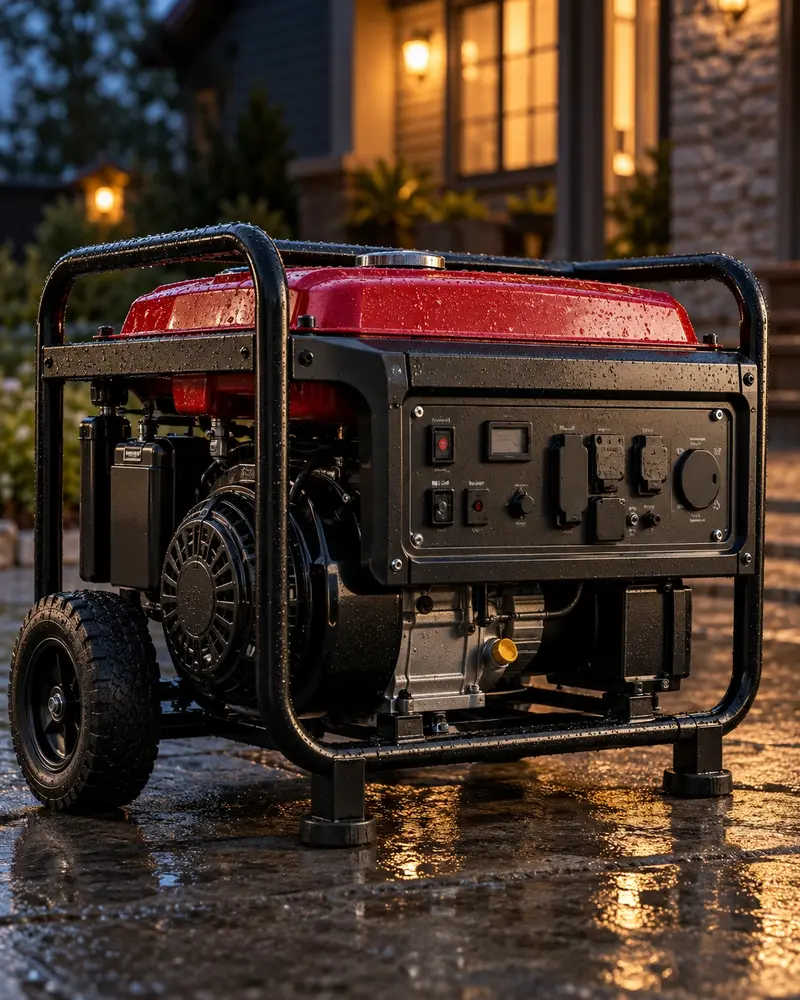
A 2 kW continuous rating can cover a carefully chosen group of smaller loads, but it is not an invitation to connect every appliance at once. Motors, compressors and heating appliances can draw substantially more power at start-up or during use.
Interactive planning guide
Select a few example household loads to see how quickly wattage adds up. These figures are planning estimates only—always check the rating plate and starting demand of your own equipment.
Choose the essentials you would prioritise.
How it works
Petrol generators produce carbon monoxide. Never run one inside a home, garage, shed or other enclosed or partly enclosed space, and keep exhaust away from doors, windows and vents.
Use suitable heavy-duty leads and follow the manufacturer’s instructions. Do not feed generator power into a home through a wall socket. Fixed household connection should use appropriate transfer equipment installed by a competent professional.
Add the running and starting demand of the appliances you intend to use. Leave headroom rather than treating the maximum output figure as a normal continuous target.
Read the manual, understand fuel storage requirements, test the unit as recommended and keep a working carbon monoxide alarm in the home. Preparation is safer than improvisation in bad weather.
Where it fits
Prioritise refrigeration, communications, lighting or another necessary load within the generator’s capacity.
A suitable unit can also supply compatible tools or equipment where normal mains access is inconvenient.
Choosing capacity, connection method, safe operating position and fuel arrangements in advance removes guesswork later.
Before you request details
Usually the better starting point is to identify priority loads and size the generator around them. Whole-house requirements can be much higher, particularly where electric heating, cooking, pumps or large motors are involved.
No. Back-feeding through a wall socket can create serious electric-shock and network hazards. If you want a generator to connect to fixed household circuits, ask a competent electrician about the correct transfer equipment and installation.
Outdoors, in a suitable dry operating position and away from doors, windows, vents and enclosed spaces. Follow the exact separation and weather-protection requirements in the manufacturer’s manual.
Not necessarily. “From £199” refers to selected petrol generator options. Output, outlets, engine specification, controls, noise characteristics, stock and other features affect the price. Request current information for available configurations.
Request information
Send a few practical details and Generator Power Limited can respond with current information about suitable petrol generator options, specifications, pricing and availability.
Company number: 03446582
Foxbridge Way, Normanton Industrial Estate, Normanton, West Yorkshire, WF6 1TW
+44 1924 711503